Appointments as Early as 8 AM, Monday-Saturday!
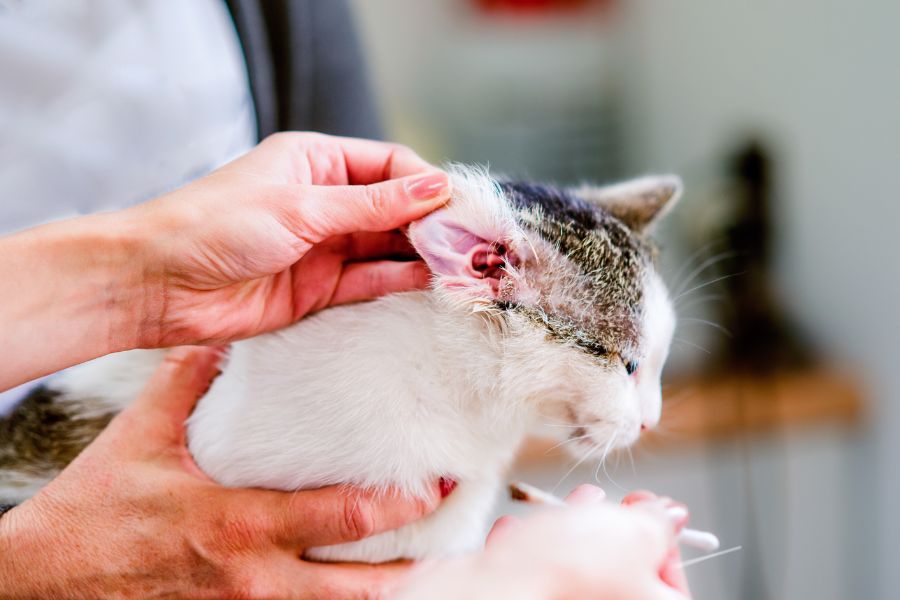
Ear infections are one of the most common health issues in pets, especially in dogs and cats. But how do you know when it’s serious enough to visit a vet? In this guide, we’ll explain the signs of a pet ear infection, when to seek veterinary care, and how to protect your furry friend from ongoing discomfort.
What Causes Ear Infections in Pets?
Ear infections in pets can develop for several reasons, and understanding the root cause is key to proper treatment. In many cases, these infections don’t resolve on their own and may worsen without care.
Common causes include:
- Bacteria or yeast overgrowth
- Allergies (food or environmental)
- Ear mites, especially in cats
- Excess moisture from bathing or swimming
- Foreign objects like grass seeds
- Underlying health conditions
Seasonal allergies and humidity changes can make pets more prone to recurring ear issues.
Common Signs of a Pet Ear Infection
Recognizing early symptoms can help you act quickly before the infection becomes severe. Here are the most common signs to watch for:
- Frequent head shaking or tilting
- Scratching or pawing at the ears
- Redness or swelling inside the ear
- Foul odor coming from the ear
- Dark or yellow discharge
- Sensitivity or pain when touched
- Loss of balance (in severe cases)
If your pet shows one or more of these signs, it may indicate an ear infection that requires attention.
When Is It Time to See a Vet for Your Pet’s Ear Infection?
This is the most important question for pet owners. While mild irritation might seem manageable at home, ear infections can quickly escalate.
1. Symptoms Last More Than 1–2 Days
If your pet’s symptoms don’t improve within a day or two, it’s time to consult a vet. Delaying care can lead to deeper infections.
2. Severe Pain or Discomfort
If your pet cries, avoids touch, or becomes aggressive when you go near the ear, it’s a clear sign of pain that needs professional evaluation.
3. Strong Odor or Heavy Discharge
A noticeable smell or thick discharge often points to bacterial or yeast infections that require prescription medication.
4. Repeated or Chronic Infections
If your pet gets ear infections frequently, there may be an underlying issue such as allergies that needs to be diagnosed and managed.
5. Balance Issues or Head Tilt
These symptoms may indicate that the infection has spread to the inner ear, which can be serious and requires immediate veterinary care.
Why You Should Avoid Treating Ear Infections at Home
Many pet owners try over-the-counter solutions or home remedies, but this can sometimes do more harm than good.
Here’s why:
- You may misdiagnose the problem (mites vs. yeast vs. bacteria)
- Incorrect treatments can worsen the infection
- Some substances can damage the ear canal
- Delayed treatment can lead to hearing loss or chronic issues
A veterinarian in Rochester can properly examine your pet’s ear using specialized tools and determine the exact cause.
How Vets Diagnose and Treat Ear Infections
When you visit a clinic like Coldwater Animal Hospital in Rochester, your vet will follow a structured approach to diagnose the issue.
Diagnosis May Include:
- Visual examination of the ear canal
- Microscopic evaluation of ear discharge
- Allergy testing (for recurring infections)
Treatment Options:
- Medicated ear drops
- Oral antibiotics or antifungals
- Ear cleaning solutions
- Anti-inflammatory medications
In severe or chronic cases, long-term management plans may be recommended.
Preventing Future Ear Infections in Pets
Prevention is always better than treatment, especially when it comes to recurring ear infections.
Simple Prevention Tips:
- Clean your pet’s ears regularly (as advised by your vet)
- Keep ears dry after baths or swimming
- Monitor for early signs like scratching or redness
- Manage allergies properly
- Schedule regular veterinary checkups
Certain breeds with floppy ears or excessive hair in the ear canal may need more frequent care.
Conclusion
Ear infections in pets are common but should never be ignored. Early signs like scratching, odor, or discharge can quickly develop into painful and serious conditions if left untreated. Knowing when it’s time to see a vet for your pet’s ear infection can make all the difference in your pet’s comfort and long-term health.
If your pet is showing any signs of an ear infection, don’t wait. Schedule an appointment with Coldwater Animal Hospital today and ensure your furry companion gets the expert care they deserve.
FAQs
Q1: How do I know if my pet’s ear infection is serious?
Ans: If symptoms persist beyond 1–2 days, including pain, odor, or discharge, it’s best to see a vet immediately.
Q2: Can pet ear infections go away on their own?
Ans: Most ear infections require treatment and rarely resolve without veterinary care.
Q3: How often should I clean my pet’s ears?
Ans: It depends on the breed and health condition, but generally, once every 1–2 weeks or as recommended by your vet.
Q4: Are certain pets more prone to ear infections?
Ans: Yes, dogs with floppy ears, allergies, or those that swim frequently are at higher risk.
Q5: What happens if an ear infection is left untreated?
Ans: Untreated infections can lead to chronic pain, hearing loss, and even inner ear damage.