Appointments as Early as 8 AM, Monday-Saturday!

The first 48 hours after a female cat’s spay surgery are critical for proper healing and comfort. Knowing what’s normal, what to expect, and how to care for your cat during this time can prevent complications and speed up recovery. This vet-approved guide explains female cat spay recovery in the first 48 hours, including behavior changes, incision care, feeding tips, and warning signs to watch for.
What to Expect After a Female Cat Is Spayed
Spaying is a routine and safe surgical procedure, but it is still surgery. During the first two days, your cat’s body is adjusting to anesthesia and healing from the incision.
Common post-spay behaviors include:
- Sleepiness or low energy
- Mild discomfort or stiffness
- Reduced appetite
- Quiet or withdrawn behavior
These symptoms are normal within the first 24–48 hours. Most cats start acting more like themselves by day two, although full healing takes about 10–14 days.
The First 12 Hours After Spay Surgery
The initial hours after surgery are when anesthesia effects are strongest. Your cat may seem disoriented or unsteady on her feet.
What’s normal:
- Grogginess or confusion
- Wobbly walking
- Dilated pupils
- Shivering or seeking warmth
How to help:
- Place your cat in a warm, quiet room away from noise and other pets
- Use soft bedding on the floor (avoid high surfaces)
- Keep lights dim and interactions minimal
Do not allow running, jumping, or stairs during this period. Even if your cat seems alert, her coordination may still be impaired.
Feeding and Water After Spay Surgery
Appetite changes are very common during female cat spay recovery, especially in the first 24 hours.
Feeding guidelines:
- Offer a small meal 6–8 hours after returning home
- If your cat refuses food, try again later — this is normal
- Resume normal feeding the next day if appetite improves
Water intake:
- Fresh water should always be available
- Drinking less the first evening is common
- Contact your vet if your cat refuses both food and water for over 24 hours
Avoid treats, rich foods, or table scraps during recovery, as these can cause stomach upset.
Managing Pain and Comfort in the First 48 Hours
Pain after spay surgery is usually mild when managed properly. Most cats are sent home with pain medication or long-lasting pain control given at the clinic.
Important reminders:
- Never give human pain medications
- Follow dosing instructions exactly
- Do not skip prescribed pain relief
Signs your cat may be uncomfortable include:
- Hiding or avoiding touch
- Growling or hissing when picked up
- Excessive licking near the incision
If pain seems to worsen instead of improve, contact your veterinarian promptly.
Incision Care and What It Should Look Like
Proper incision monitoring is one of the most important parts of female cat spay recovery.
A normal spay incision:
- Small and closed
- Slight redness or swelling
- Minimal or no discharge
Warning signs to watch for:
- Swelling that increases after day one
- Redness spreading around the incision
- Pus, blood, or foul odor
- Open stitches or visible tissue
Check the incision twice daily under good lighting. Do not apply ointments, sprays, or home remedies unless directed by your vet.
Preventing Licking and Activity Restrictions
Cats naturally want to groom, but licking the incision can cause infection or reopen the wound.
Ways to prevent licking:
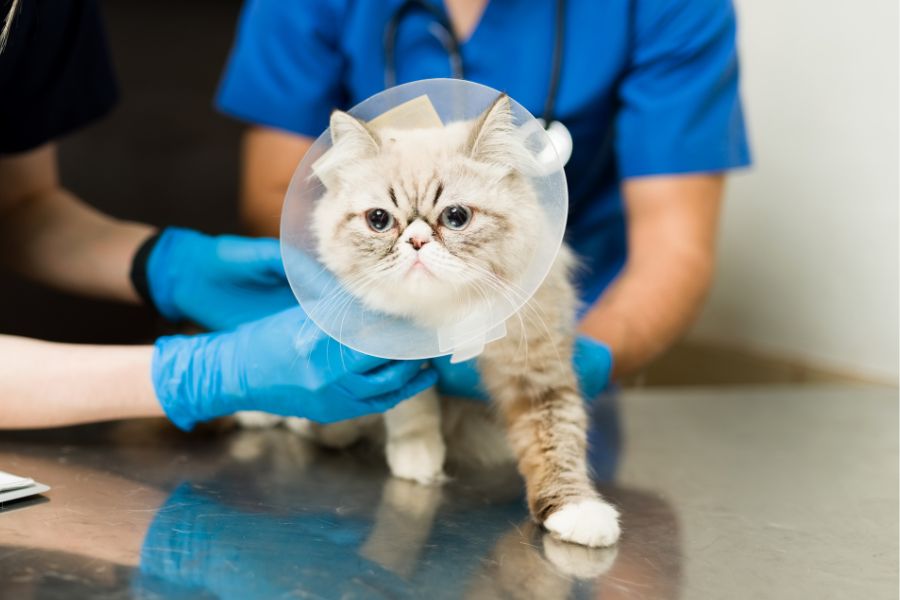
- Use an e-collar (cone) if recommended
- Try a recovery suit or surgical onesie
- Supervise closely when the cone is off
Activity rules for the first 48 hours:
- No running or jumping
- No climbing furniture
- Keep confined to a small room or large crate
Even calm cats can suddenly jump, so limiting space is essential early on.
Litter Box Use After Spay Surgery
Most cats will use the litter box normally within hours of coming home.
Tips:
- Use a low-entry litter box
- Keep the box clean and easy to access
- Avoid dusty or clumping litter if advised
If your cat does not urinate within 24 hours or strains in the box, contact your nearest veterinarian.
Behavioral Changes You Might Notice
Temporary behavior changes are normal during the first two days after surgery.
You may notice:
- Increased sleeping
- Less interest in play
- Being more clingy or more distant
These changes usually resolve quickly. By the end of the second day, many cats have regained normal energy levels, although activity restrictions should still be followed.
Signs of Complications in the First 48 Hours
While complications are uncommon, early detection is critical.
Call your vet immediately if you see:
- Vomiting more than once
- Refusal to eat or drink for over 24 hours
- Lethargy that worsens instead of improves
- Pale gums or difficulty breathing
- Excessive bleeding or incision swelling
Trust your instincts if something seems off; it is always safer to ask.
How Long Does It Take for a Female Cat to Recover Fully?
While the first 48 hours are the most sensitive, full recovery takes time.
Typical recovery timeline:
- 24–48 hours: anesthesia effects fade
- 3–5 days: energy slowly returns
- 10–14 days: incision fully heals
Stitches or staples, if present, are usually removed around day 10–14 unless absorbable sutures were used.
Conclusion:
Female cat spay recovery during the first 48 hours focuses on rest, monitoring, and preventing complications. With proper care, most cats recover smoothly and return to their normal routines quickly. If you have any concerns about your cat’s healing or behavior, professional guidance is always the safest option. For trusted surgical aftercare and compassionate support, pet owners in Rochester can trust Coldwater Animal Hospital for expert veterinary surgical care. Contact us today to follow up or discuss any post-spay concerns.
FAQs
Q1: Is it normal for my cat to sleep all day after being spayed?
Yes, increased sleeping is normal during the first 24–48 hours due to anesthesia and healing.
Q2: How soon can my cat jump after spaying surgery?
Jumping should be avoided for at least 10–14 days to prevent incision damage.
Q3: Can I pick up my cat after she’s spayed?
Yes, but handle her gently and support her body to avoid pressure on the incision.
Q4: What should I do if my cat licks her spay incision?
Use a cone or recovery suit immediately and contact your vet if licking continues.
Q5: When should I worry about my cat’s spay incision?
Contact your veterinarian if you see swelling, discharge, redness, or if the incision opens.